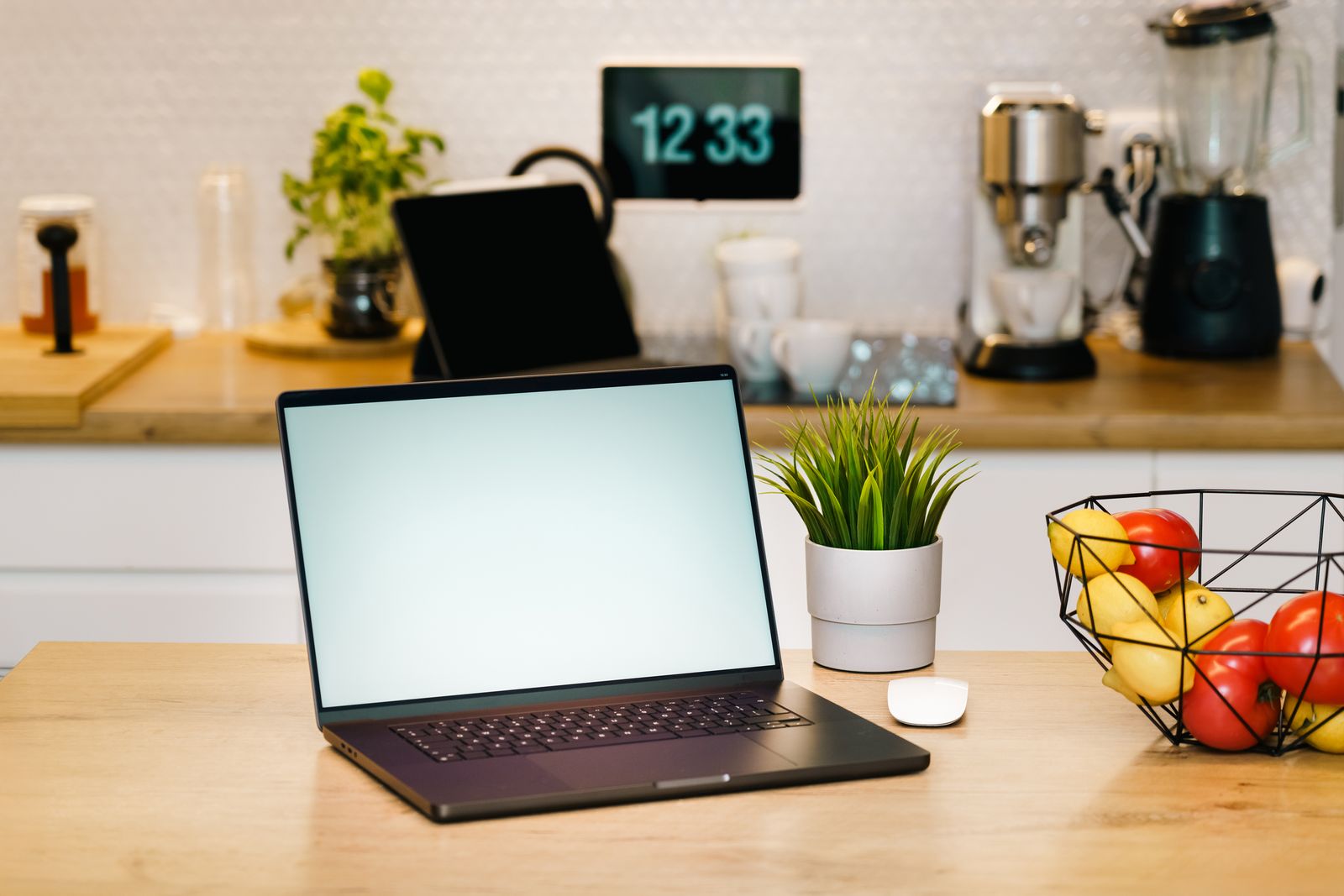
Most people never think about the shape of their mouse or keyboard until something starts to ache. Then the word "ergonomic" appears on everything, from mice that stand on their side to keyboards split down the middle. This guide explains what those shapes are trying to do, who they tend to suit, what the Health and Safety Executive (HSE) says about using a keyboard and mouse, and how to get used to a new shape without giving up after two days. It is about comfort and set-up, not medicine: if you have pain that will not go away, the right person to see is a GP, and there is more on that below.
What "ergonomic" means here
Ergonomics is the study of fitting the work to the person rather than the person to the work. On a mouse or keyboard the word is used loosely, and there is no standard a product has to meet before it can be called ergonomic. In practice it means the shape has been changed from the usual flat mouse or flat keyboard to put the hands, wrists and arms in a position the maker believes is more natural.
The best starting point is not a product at all but the HSE's guidance for anyone who works at a screen. The Health and Safety (Display Screen Equipment) Regulations apply to people who use a computer daily for continuous spells of an hour or more, and the HSE's leaflet for them, Working with display screen equipment, gives plain advice on the keyboard and mouse. The points that matter most for this guide are these:
- Try to keep the wrists straight when typing.
- Leave a space in front of the keyboard so you can rest your hands and wrists when you are not typing.
- Type with a soft touch and do not overstretch the fingers.
- Put the mouse within easy reach, so it can be used with a straight wrist.
- Support the forearm on the desk, do not grip the mouse too tightly, and rest the fingers lightly on the buttons rather than pressing hard.
- Sit upright and close to the desk, and move the keyboard out of the way when you are only using the mouse.
The HSE's own pages on good posture add that the keyboard should sit just below elbow height and the mouse in line with the elbow, with the forearms roughly horizontal. Its workstation checklist notes that mice and trackballs come in a variety of shapes and sizes, and that a different kind of device may be better for some tasks but worse for others. That last point is worth holding on to: no single shape is right for everyone.
Why a laptop on its own makes this hard
A laptop's keyboard and screen are joined together, so you cannot put both in the right place at once. If the screen is at a comfortable height, the keyboard is too high; if the keyboard is right, you are looking down at the screen. The HSE's advice for anyone using a laptop for long periods is to use a separate keyboard and mouse so the screen can be raised on a riser, and its leaflet suggests a docking station or firm surface with a full-sized keyboard and mouse wherever possible. Raising the laptop on one of the adjustable laptop stands or foldable aluminium stands and adding a separate keyboard and mouse is often the single biggest change, before any ergonomic shape comes into it. The guide to setting up a laptop desk goes through the whole desk step by step.
Who looks at ergonomic shapes
People tend to try an ergonomic mouse or keyboard for one of a few reasons: they spend most of the working day at a computer, they find an ordinary mouse uncomfortable after a few hours, they have been advised to try a different shape by an occupational health adviser or physiotherapist, or they simply prefer the feel. None of these needs a special product to begin with. A straight wrist, a supported forearm, a relaxed grip and regular breaks cost nothing, and the HSE puts them first. An ergonomic shape is one more option on top of that, not a replacement for it.
Vertical mice
A vertical mouse is turned on its side, so you hold it with your hand upright, thumb on top, in roughly the position your hand takes when you offer it for a handshake. An ordinary mouse asks you to turn your palm flat to the desk, which twists the forearm. The idea of the vertical shape is to take that twist out.
The range of ergonomic and vertical mice covers several variations on the idea:
- Fully vertical mice stand close to upright. They take the most getting used to, and suit people who want the biggest change from a flat mouse.
- Angled mice lean part of the way, often somewhere between flat and upright. They feel closer to a normal mouse and are an easier first step.
- Contoured mice stay mostly flat but are shaped to fill the palm, with a thumb rest, so the hand relaxes over them instead of clawing at a small shell.
- Trackballs keep still while a thumb or fingers roll a ball to move the pointer. The arm hardly moves at all, which some people like and others find fiddly. The HSE's checklist names trackballs alongside mice as general-purpose pointing devices.
Size and hand
Size matters more with a vertical mouse than with a flat one, because the hand wraps around it. A mouse that is too small leaves the little finger dragging on the desk; one that is too big stretches the fingers to reach the buttons. Product pages usually give the mouse's length and height, and some give a hand size the shape is meant for. Measure your hand from the crease of the wrist to the tip of the middle finger and compare.
Most vertical mice are made for the right hand. Left-handed versions exist but are less common, so check before you choose. A flat, symmetrical mouse can be set up for either hand in the computer's settings, but a vertical one cannot be turned round.
Connection and buttons
Ergonomic mice connect in the same ways as any other mouse: with a small USB receiver, like the wireless mice, or by Bluetooth, like the Bluetooth mice. The guide to choosing a wireless mouse explains the difference. Because the hand sits at a new angle, the buttons sit at a new angle too: you click with a sideways squeeze of the finger rather than a downward press. Try to keep that click light, as the HSE suggests for any mouse.
Pointer speed
One small setting makes a surprising difference. The HSE's checklist points out that pointer speed and accuracy can be changed in the computer's software. If the pointer moves too slowly, you end up sweeping your arm across the desk; too fast, and you grip harder to hit small targets. On Windows the setting is in the mouse settings, and on a Mac in the mouse or trackpad section of System Settings. Spend a minute setting it so a small, relaxed movement reaches the edges of the screen.
Split and tented keyboards
An ordinary keyboard asks both hands to meet in the middle, which bends the wrists outwards slightly and turns the palms flat. Ergonomic keyboards change that in three main ways, often combined.
Split keyboards
A split keyboard divides the keys into a left half and a right half. On some the halves are joined in a single body with a gap or a curve in the middle; on others they are two separate pieces you can place as far apart as your shoulders. The aim is to let the hands sit in line with the forearms, keeping the wrists straight, which is what the HSE asks for when typing.
A split layout has one thing to know before you buy: keys that some people reach across for, such as B, Y or 6, may be on the "wrong" half for the way you have always typed. Touch typists who use the standard finger positions usually adapt quickly. People who type with two or three fingers sometimes find a split keyboard harder, not easier.
Tented keyboards
Tenting means raising the middle of the keyboard so each half slopes down to the outside, like the roof of a tent. This turns the palms slightly towards each other, the same idea as a vertical mouse. Some keyboards have built-in feet or a hinge for tenting; separate split halves can often be propped at an angle. A small amount of tent is usually more comfortable than a lot to begin with.
Curved and wave keyboards
Between the flat keyboard and the fully split one are curved or wave-shaped keyboards. The keys follow a gentle arc, often with a built-in palm rest and a raised middle. They feel more familiar than a split keyboard, take less getting used to, and are where many people start.
Height, tilt and the feet underneath
Many keyboards have little feet at the back that tilt them towards you. The HSE's checklist notes that the keyboard should tilt, and that users of thick, raised keyboards may need a wrist rest. A tall keyboard tilted up at the back bends the wrist upwards, which is the opposite of straight. Some ergonomic keyboards have feet at the front instead, sloping the keys slightly away from you. Try the keyboard flat first and add tilt only if it feels better.
Choosing one
Ergonomic keyboards come wireless and Bluetooth, with or without a number pad, and in mechanical and quieter designs, so the rest of the choice is the same as for any keyboard. The keyboards themselves are in wireless keyboards and Bluetooth keyboards; look in a keyboard's description for words such as split, tented, curved or ergonomic. A long keyboard with a number pad pushes the mouse further to the right, so a compact keyboard with a separate number pad, placed on the left or only when needed, keeps the mouse closer in line with the elbow, as the HSE suggests. The guide to choosing a keyboard for your laptop covers layouts, connections and mechanical switches in full.
Wrist rests and mats
A wrist rest is a soft pad that sits in front of the keyboard or the mouse. It sounds simple, but it is easy to use one in a way that defeats the point.
Resting, not leaning
The HSE's leaflet talks about a space in front of the keyboard to rest your hands and wrists when you are not typing. That is the right way to think about a wrist rest: somewhere to rest during pauses, not a pivot to type from. If you plant your wrists on the pad and type by bending the hands up and over the keys, the wrist ends up bent, not straight. Many people find it more comfortable to let the heel of the palm rest lightly on the pad, rather than the underside of the wrist.
The HSE's workstation checklist gives one clear case for a rest: users of thick, raised keyboards may need one, because the keys sit high above the desk and the hands would otherwise be held up in the air. With a thin, low keyboard, a rest may not be needed at all.
Mouse wrist rests
Mouse wrist rests are smaller pads, often built into a mouse mat. The HSE suggests supporting the forearm on the desk while using the mouse, and its checklist says that support can come from the desk surface or the arm of a chair, and where it cannot, a separate supporting device may help. A rest under the wrist or forearm is one way of doing that. Again, the aim is support during use without bending the wrist up or to the side.
Wrist rests are made in gel, memory foam and firmer foam, covered in fabric or a smooth synthetic. Gel feels cool and moulds to the hand; foam is lighter and softer. Choose one the same length as your keyboard, or a short one for a compact keyboard, and about the same height as the front edge of the keys.
Mouse mats and desk mats
The HSE's checklist notes that a mouse mat may be needed so the mouse works smoothly. Most modern mice track on a plain desk, but glass, gloss and some patterned surfaces cause a jumpy pointer, which makes people grip harder. The mouse mats and desk mats range includes small mats for the mouse alone and large mats that go under the keyboard and mouse together. A large mat also gives the forearms a softer, warmer surface to rest on than a bare desk, and keeps a separate keyboard from sliding.
Getting used to a new shape
An ergonomic mouse or keyboard nearly always feels strange at first. Your hands have spent years learning the old shape, and a new one is slower and clumsier for a while. Many people give up in the first two days, which is a pity, because that is the hardest part.
Go gradually
Do not switch everything at once on a busy day. Keep the old mouse plugged in and use the new one for an hour, then for a morning, then for the whole day as it starts to feel normal. With a split keyboard, start on emails and notes rather than a deadline. Typing speed usually drops at first and comes back with practice.
Set it up properly
A new shape will only help if the rest of the set-up is right. Run through the HSE's points again: keyboard just below elbow height, mouse in line with the elbow, forearms roughly horizontal, wrists straight, a relaxed grip, and the mouse right beside the keyboard rather than out at arm's length. Raise the chair if the desk is too high, and if your feet then do not reach the floor, the HSE suggests a footrest may help, particularly for smaller people. The footrests range has them in fixed and adjustable heights.
Change position and take breaks
No shape is comfortable if you hold it without moving for hours. The HSE's advice is to take short breaks often rather than long ones rarely: its own example is that 5 to 10 minutes every hour is better than 20 minutes every two hours. It also suggests changing activity before you get tired, rather than waiting until you need to recover, and stretching and changing position. Some people switch the mouse to the other hand for part of the day, or alternate between a mouse and a trackpad, to vary the movement.
When to get advice
The NHS describes repetitive strain injury (RSI) as pain caused by repeated movement of part of the body, and lists poor posture when sitting at work as one of the causes. It says to see a GP if symptoms are not going away or are getting worse, and suggests talking to your employer about changing how you work. If you work for an employer and use a computer every day, they also have duties under the display screen equipment rules to assess your workstation, and that assessment is the place to raise a sore wrist or shoulder. An ergonomic mouse or keyboard can make a desk more comfortable, but it is not a treatment, and no product can promise to stop pain.
Questions people ask
Is an ergonomic mouse better for everyone?
No. The HSE's checklist notes that a different device may be better for some tasks and worse for others. Many people are perfectly comfortable with an ordinary mouse used with a straight wrist and a relaxed grip. An ergonomic shape is worth trying if an ordinary one is uncomfortable.
How long does it take to get used to a vertical mouse?
It varies from person to person. Most of the awkwardness is in the first few days. Using it for short spells and building up, with the old mouse still to hand, makes the change easier.
Will a wrist rest stop my wrists aching?
A rest can make pauses more comfortable and help with a thick, raised keyboard, but typing with the wrists pressed onto it bends them. If an ache does not go away or gets worse, the NHS says to see a GP.
Can I use an ergonomic keyboard with a laptop?
Yes. It connects by USB receiver or Bluetooth like any other keyboard. It works best with the laptop raised on a stand, so the screen is at eye height and the keyboard sits low on the desk in front of you.
Are ergonomic mice made for left-handed people?
Some are, but most vertical and contoured mice are shaped for the right hand. Check the product page for the hand it is made for before choosing.
Do I need a split keyboard or will a curved one do?
A curved keyboard is the gentler change and suits many people. A fully split keyboard lets you set each half where you want it but takes longer to learn. If you are unsure, the curved design is the easier first step.
Where to go next
The mice are in ergonomic and vertical mice, the keyboards in wireless and Bluetooth keyboards, with keyboard and mouse sets if you want both together, and wrist rests and mats to finish the desk. Delivery is included in every price and tracked to your door. For the rest of the set-up:
- Setting up a laptop desk that is kind to your back: the HSE's guidance, step by step
- How to choose a laptop stand: raising the screen to eye height
- How to choose a wireless mouse: receivers, Bluetooth, size and batteries
- How to choose a keyboard for your laptop: layouts, sizes and mechanical keys


